The Downtown Festival Returns to Roxy Cinema
The festival’s founder and associate director talk independent filmmaking, artistic risk, intergenerational programming and the expanding vision for its third edition.
Since launching in 2024, The Downtown Festival has quickly grown from an intimate three-day festival into a ten-day fixture of New York’s downtown cultural calendar. Founded by filmmaker Rebekah Sherman-Myntti, the artist-led festival returns this October for its third edition, bringing together emerging and established artists across generations and disciplines.
This year’s film lineup includes the US premiere of Paul Schrader’s The Basics of Philosophy, the world premieres of Michael M. Bilandic’s Cabaret Boys and Nick Sandow’s The Mayflower, and a special presentation of Alexandre Rockwell’s The Projectionist. The program also looks back at downtown New York through rare archival portraits of Robert Mapplethorpe, Jean-Michel Basquiat, and Nan Goldin, alongside repertory screenings including Ethan Hawke’s Chelsea Walls and Michael Cuesta’s L.I.E.
The festival has expanded considerably since its first year — film submissions alone increased by 160 percent in 2026 — while its focus on independent voices, artistic risk, and genuine exchange between artists has remained at its core. This year also brings a stronger intergenerational element to the programming, putting important older work into conversation with new voices.
Ahead of this year’s festival, we caught up with Sherman-Myntti and Associate Director Briana Bursten about how The Downtown Festival has evolved, what guides their programming, the state of independent filmmaking today, and preserving the intimacy and independent spirit that have defined the festival from the beginning.

The Downtown Festival founder Rebekah Sherman-Myntti.
Overall, how do you feel the festival has evolved since its first iteration?
Rebekah Sherman-Myntti: The Downtown Festival has evolved quite a lot since 2024, but the core mission has stayed very consistent. It has always been about creating an artists-for-artists platform centered on independence, discovery, and genuine creative exchange. The first year was really about seeing whether this seemingly crazy idea could actually work and be pulled off, and the response was incredibly positive. Then our second year really confirmed how much of a desire there is for something like this to exist. It has also been awesome seeing films that premiere with us go on to get distribution deals, or musicians we feature receiving big touring opportunities. There are a lot of eyes on the artists we feature.
In terms of scale, it has grown a lot since the beginning! We opened submissions for the film program in 2025, and they increased by 160 percent in 2026. The festival has also become even more ambitious in terms of our programming, reach, and the range of artists getting involved, which has been really exciting.
At the same time, I’m very protective of keeping everything artist-led and personal. I never want growth to make it feel cold or anonymous like some of these larger festivals. There’s a kind of organized chaos, passion, and aliveness to The Downtown Festival that I really love, and I want to preserve that as it gets bigger. I want Downtown to be an alternative to the current festival landscape that can feel, if I’m being honest, pretty stale. So many festivals have become very, very corporate, risk-averse, and disconnected from the artists themselves. As we grow and evolve, I want to make sure we never lose the intimacy and sense of personality and spontaneity that made The Downtown Festival unique in the first place.
I was looking back at our first interview and realized that the first festival was quite a bit shorter. Obviously, last year and this year’s editions are much longer. How did the response to that first year influence you as you began expanding the festival and rethinking the programming?
RSM: What really struck me after the first year was the way people were experiencing the festival. They weren’t just coming to see one film or performance and leaving. People would stay for multiple programs, come back the next day, meet each other between events, and start forming real relationships. Some of those connections have even turned into collaborations.
All of that made me very excited about the idea that the festival could become something people really spend time inside, with its own energy and sense of community that builds over the course of the program. And that’s really what informed the longer format. We wanted to create enough time and space for unexpected connections to happen, whether that’s filmmakers crossing paths with musicians, writers with visual artists, or younger artists meeting people from completely different generations. Extending the festival gave us more room for those kinds of collisions to happen naturally.
The expansion was never really about making it bigger just for the sake of being bigger. It came from seeing how much people wanted to really inhabit the festival and be a part of it. And honestly, the amount of incredible work we’ve been receiving has also made it absolutely necessary to expand the number of days — and we’re still not even able to include everything we love!
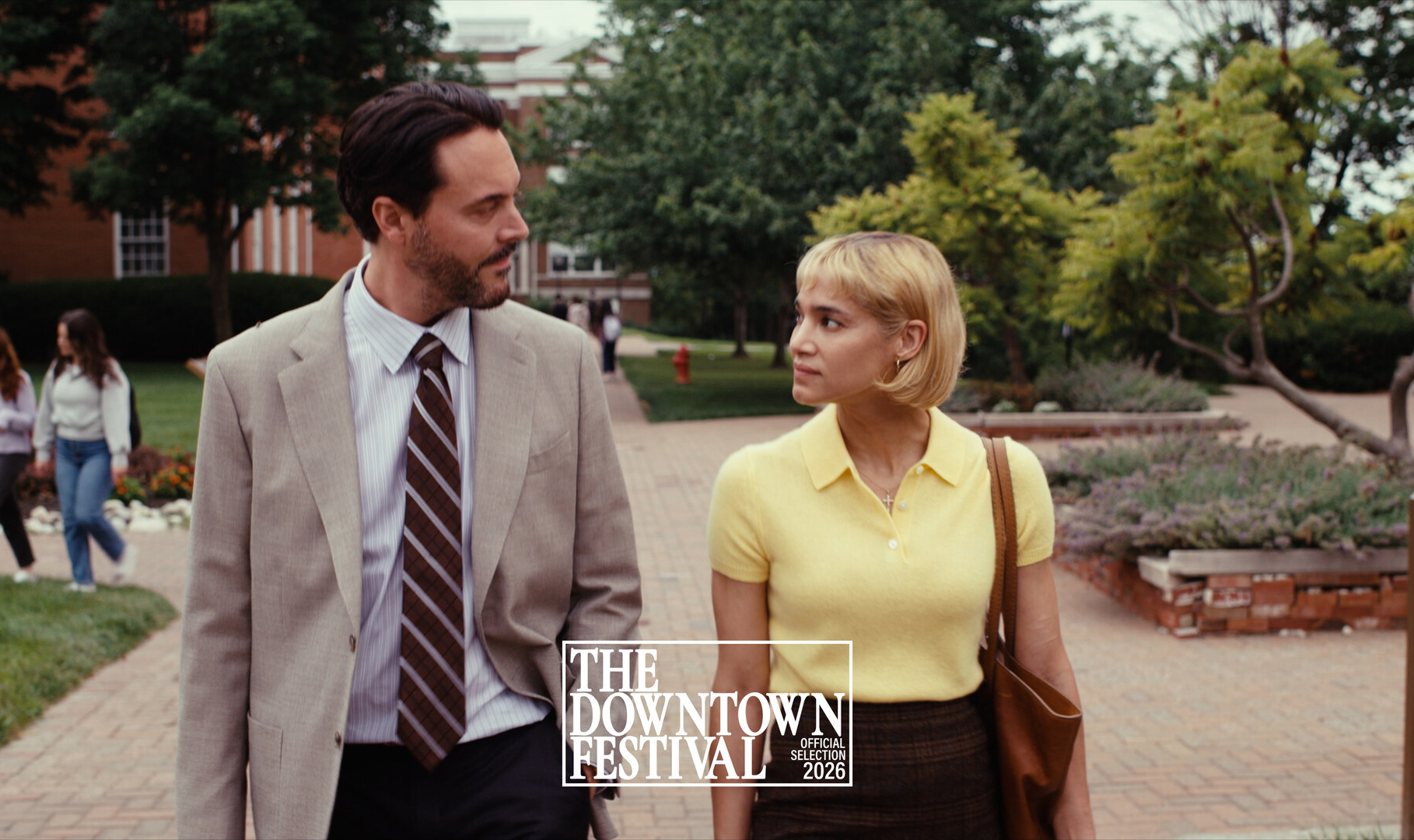
Still from The Basics of Philosophy, directed by Paul Schrader. Courtesy of The Downtown Festival.
What can we expect to see in the 2026 edition that we haven’t seen before?
RSM: This year feels more expansive in terms of both scale and range of artists. The film program is our most ambitious yet, but we’re also expanding the music showcases, artist talks, special events, and collaborations. There’s a stronger intergenerational element too. Putting important older work into conversation with new voices feels increasingly central to what we’re doing.
We’re also using more spaces throughout Lower Manhattan. I love the idea that one night might happen in a traditional movie theater like Roxy Cinema, and the next event will be in a restaurant ballroom, or somewhere that doesn’t traditionally host our kind of programming. It’s fun to give our audience one-night-only experiences.
Art is meant to push boundaries and sometimes explore taboo or uncomfortable subject matter, but the larger festival landscape can often feel increasingly risk-averse and formulaic. As an artist myself, I’ve struggled with the question of whether controversial work will be well received, even though taking those kinds of risks can be part of what makes art exciting. The Downtown Festival seems particularly open to work that doesn’t play it safe. How much is that part of your intention from a programming standpoint?
RSM: It’s a huge part of it. I’m really interested in work that feels like it has something to say and has something at stake. That doesn’t necessarily mean provocation for the sake of provocation — I’m certainly not into being edgy just to be edgy; that’s not my jam — but I do think art should be allowed to be uncomfortable, contradictory, or even occasionally alienating. There’s so much pressure now for work to be easily categorized, easily marketed, easily explained — things have gotten so dumbed down! It’s true for filmmakers, musicians, you name it. And I find that incredibly limiting. Some of the work I love most doesn’t immediately tell you how to feel about it.
As a filmmaker, I understand how vulnerable it can feel to make something that doesn’t fit neatly into expectations, especially when the work is deeply personal. So from a programming perspective, I want to create a place where risk is genuinely valued and celebrated. A lot of the work we highlight comes from a very personal place for the artist, and I think that sensitivity is often part of what makes it compelling. I would always rather show something singular and imperfect than something polished that feels completely safe.
As the festival grows, how do you preserve that independent spirit while also building something sustainable?
RSM: That’s probably the central challenge. Growth is super exciting, but I’m also very aware that, if it’s handled the wrong way, it can completely flatten or even destroy the things that made The Downtown Festival special in the first place. For me, sustainability has to come from finding partners who genuinely understand the ethos of the festival, rather than changing our ethos to accommodate partners. The goal is to build something with real infrastructure, resources, and longevity while still keeping it artist-forward, exciting, and unpredictable.
And I don’t think growth has to mean everything gets way bigger across the board. Some of our most meaningful events might still be 100 people in a room. I want the festival to grow in reach and capacity, but still maintain that certain intimacy and sense of closeness that people have responded to from the beginning.
You both come from backgrounds as independent producers. Rebekah, you’re also a director. How does that experience inform the way you approach the festival and the artists you work with?
RSM: I think we approach artists with a lot of empathy for what it actually takes to get something made. We know how much work, uncertainty, compromise, problem-solving, and emotional investment exists behind the scenes of a project before it ever reaches an audience.
That definitely shapes the way the festival is run. We understand how vulnerable it can be to put work out into the world, so we try to be thoughtful about how films are presented, who they’re put in conversation with, and how the artists themselves are brought into the experience. I’m very conscious of making artists feel supported because that’s how I’d want to be treated as a filmmaker.
I also think filmmaking and producing teach you to be incredibly resourceful and collaborative, which is essential to building a festival like this. You’re constantly figuring out how to make ambitious things happen with extremely limited resources, bringing the right people together, and finding creative solutions. Being a director also makes me very responsive to work that feels deeply personal and impossible to separate from the person who made it, so I want the festival to protect and celebrate that individuality.
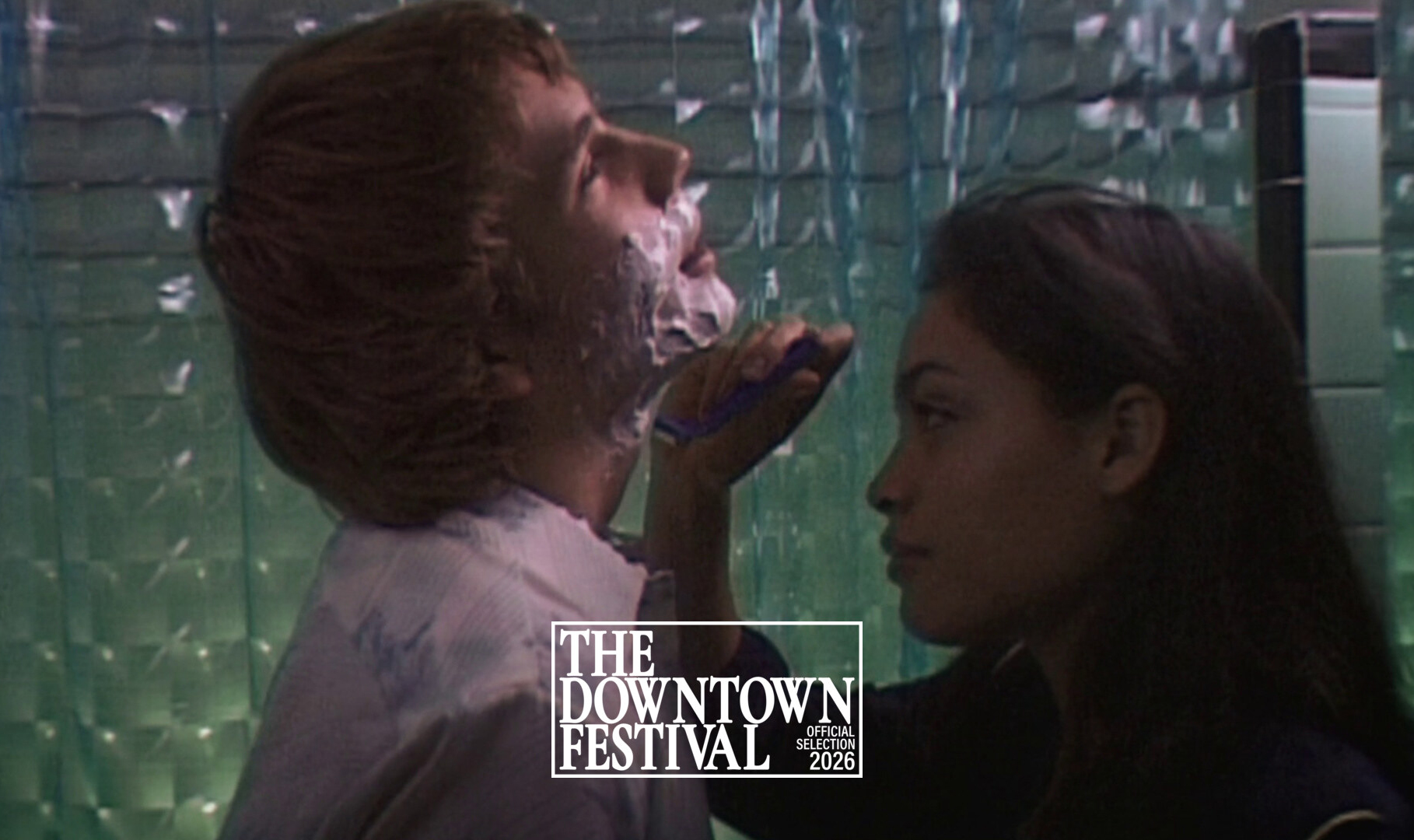
Still from Chelsea Walls, directed by Ethan Hawke. Courtesy of The Downtown Festival.
Briana, you joined The Downtown Festival while its first edition was already taking shape. What initially drew you to getting involved, and how has your role evolved as the festival has grown?
Briana Bursten: I met Rebekah in the summer of 2024. We’d each been brought on to a project (our friend Ricardo Rocha’s proof-of-concept film) separately as producers and had never worked together before, but we hit it off quickly. We’re both detail-oriented and share an intense work ethic, but we also have a similar sense of humor and lightness about what we do. While on that set, Rebekah told me she was launching a festival that fall, which at that point was just a few months away. I know firsthand how hard it is for truly independent work to find a home, and the idea of giving those films a festival premiere and a theatrical audience was so exciting to me. Simply put, I found starting a festival from scratch really brave, and I wanted to be a part of it.
At that point, she had a few venues that had agreed to be a part of it because they believed in the idea, and a list of artists and collaborators whose work she wanted to show. I came on as a producer for the first edition, and it was the two of us handling all the logistics to turn the festival into a reality. To be honest, so much of it was completely new territory for us, but we’re both problem-solvers, so we dove in headfirst and learned together. The first year was so informative, fulfilling, and fun that I knew I wanted to help build the festival in the years to come.
In our second year, I became Associate Director, taking on programming in addition to producing and running operations alongside Rebekah. Anyone who’s worked with her knows that she champions people whose work ethic she admires, and the evolution of my role is an example of that. We work hand-in-hand all year round and wear a lot of different hats. Our dynamic feels very collaborative and non-hierarchical, even though she’s been a mentor to me in so many ways.
What guides the programming process for The Downtown Festival? What makes a film feel right for the festival?
BB: My programming grows out of my work as an independent producer. Most of the narrative projects I produce don’t have institutional or studio backing, or much money, and I’ve seen firsthand the kind of ecosystem that creates. Working with limited resources demands collaboration and inventive problem-solving, and films often arrive somewhere special because of it. That’s the lens I bring to programming.
For me, it kind of all comes down to an energy read: a film feels right for The Downtown Festival when it feels alive, when it seems like the story could only have been told this way, by these particular people.
Often, I’ll watch something that genuinely excites me, then look at the credits and notice the filmmakers were wearing multiple hats: directors who shoot and/or edit their own work; crew members from commercial sets, or people with jobs outside of film entirely, trying their hand at directing for the first time; or filmmakers who, unable to pay industry rates, gathered close collaborators who believed in their vision and shot around everyone’s day jobs. We don’t set out to choose films made this way, but I do think you can feel the passion and creativity in work by people who took risks and found new ways to make their films. These are the films that deserve to be celebrated, and giving them a platform to reach audiences is what the festival is all about.
RSM: A lot of it is instinct. I’m looking for work that feels personal and alive. I’m much less interested in whether something fits neatly into a genre or category than whether it feels curious, emotionally specific, formally interesting, or willing to take a risk. We want to support artists who have a real point of view, where the films feel like they could only have been made by that person.
I’m also thinking about how each film sits within the larger program. The festival is very intergenerational and multidisciplinary, so I love creating conversations and links between a new filmmaker and an older work, or between cinema and music, art, performance, or writing. A film feels right for us when it has a true sense of independence to it. It should feel like it has something at stake and isn’t simply trying to satisfy an existing formula.
What are you seeing in independent filmmaking right now that feels particularly exciting or vital?
BB: I’m really excited by the number of filmmakers mixing formats, weaving together iPhone, handicam, webcam, still photographs, and archival material, sometimes alongside footage from cinema cameras. It’s especially cool when this shows up outside of “experimental” cinema, in more traditional narrative filmmaking. There’s something approachable about that texture, and it breaks down the idea that you need expensive equipment to make a movie. It feels like an invitation to anyone with a story to tell.
RSM: I’m excited by filmmakers who are becoming less concerned with staying in one lane. There’s a lot of work right now that moves between documentary and fiction, film and visual art, music and performance, and I think that looseness can be incredibly fertile. I’m drawn to artists who are using whatever form makes sense for the thing they’re trying to express rather than worrying too much about how it will be categorized.
I also think some of the most vital work right now is deeply personal. There’s something powerful about filmmakers turning toward their own families, communities, obsessions, histories, et cetera, and making work that feels very specific. Especially at a moment when so much of culture can feel led by algorithms and marketability, I think specificity, strangeness, vulnerability, and having a real point of view are especially important. And exciting!
What is the larger vision for The Downtown Festival? Where would you like to see it go in the coming years?
RSM: I’d love for The Downtown Festival to become a known home base for artists from around the world who are pushing beyond conventional categories and looking for a real community around their work. A huge part of that for me is creating a space where older generations of artists and younger generations are genuinely in conversation with one another, rather than existing in separate cultural worlds. I want artists to be able to show their work alongside people they might never otherwise be programmed with, and for those juxtapositions to create unexpected connections between people and the work itself. I think there’s so much value in bringing artists with very different histories, references, and ways of working and thinking into the same room and seeing what comes out of that.
I’d also love for the festival to expand its footprint and become an even larger celebration of downtown New York City — taking over more spaces, neighborhoods, and unexpected corners of Lower Manhattan each year, while also building out year-round programming beyond those ten days in October. I’ve always seen the festival as part of a much larger artistic ecosystem. I’m also a director and producer working on a few things right now that connect to that broader “Downtown” world and will be announced soon. The long-term vision is to build something that extends beyond the festival itself and becomes an ongoing platform for artists, ideas, collaboration, discovery, and the culture of downtown.
The Downtown Festival takes place October 9–18. View the full program—here.
WORDS Hillary Sproul
FEATURED IMAGERY The Downtown Festival